2026-09-30T13:21:33.431Z ·
What Happened on January 28, 2025, and How to Keep It From Happening to Your Pipes
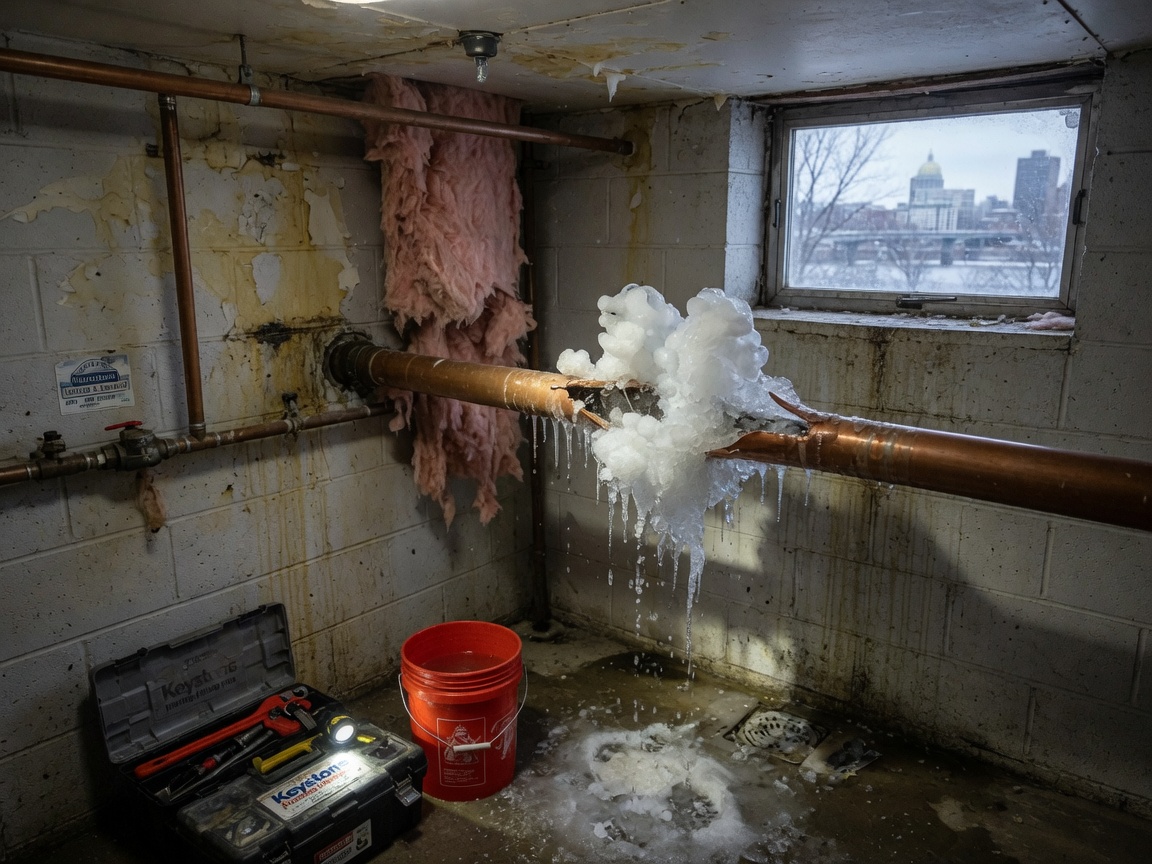
On January 28, 2025, Harrisburg firefighters answered more than two dozen burst-pipe calls in a single night, according to abc27. One of them was at the old federal courthouse. What stood out was the timing, because the calls came as temperatures warmed.
Pipes split on the thaw, not during the freeze. When water freezes inside a pipe it expands and can crack the pipe or a fitting. The ice itself often plugs the crack, so nothing seems wrong while it stays frozen. When the temperature climbs and the ice melts, water pushes through the split and the damage shows up all at once.
Fire Chief Brian Enterline put the lesson plainly: "the quicker you shut it off, the less damage you have." That is why the first move is always the main shutoff, and it is why knowing where yours is matters more than any gadget. A split pipe on an upper floor can run for a long time before anyone sees it.
This is a normal winter here. Harrisburg sees about 101 nights a year at or below freezing, and the January average low is 24.9 F at Capital City Airport, based on NOAA 1991-2020 normals. In a typical year there are also about 17 to 19 days when the high never gets above 32 F. Cold snaps are routine, so pipes that survive most winters are still at risk on the wrong night.
Which pipes are at risk in this housing. The median Harrisburg home was built in 1947, and 43% of homes in the city predate 1940. In houses like that, the usual trouble spots are uninsulated front walls where the water service enters, crawl spaces under rear additions, detached garages with a supply line running out to them, and unheated basements in the older boroughs. If a pipe sits in an exterior wall or an unheated space, treat it as exposed.
Insulate and seal. Foam sleeves on exposed pipes in basements and crawl spaces are a simple start. Close gaps where cold air comes in around the pipe entry points, rim joists and foundation vents. Cold air moving across a pipe does more harm than a still, cold room.
Keep the heat on, and drip the far tap. On a hard-freeze night, keep the heat running in the whole house, including rooms you do not use, and open cabinet doors under sinks on exterior walls. Leave the tap farthest from where the water enters the house running at a slow drip, because moving water is much harder to freeze. If you are away, do not turn the thermostat down to a level where the basement can drop below freezing.
Know the main before the cold arrives. In older Harrisburg houses the main is usually in the basement on the front wall, near the water meter. Find it, test it and tag it. If a tap runs dry after a hard freeze, that points to a frozen section, and frozen pipe repair covers what that job looks like.
When the thaw starts, look around. Check ceilings, wall surfaces near exterior walls, and the basement as the temperature rises. A wet patch spreading on plaster, a stain growing on a ceiling or the sound of hissing inside a wall means shut off the main right away. For an active leak, emergency plumbing repair explains what to do while you wait for help, and if you need a plumber, call (717) 853-4052 and we will connect you with an independent local one.