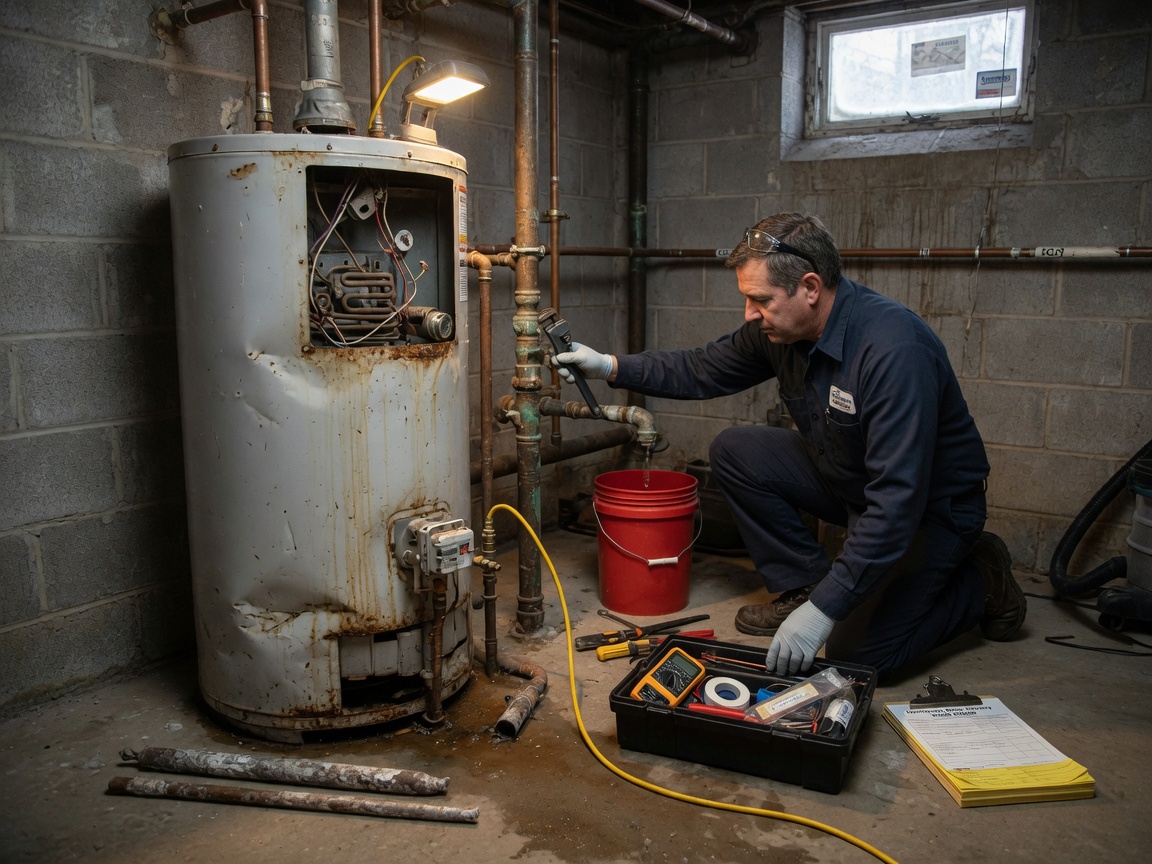
A cold shower is how most people find out. Others see a puddle spreading from the base of the tank, or hear a rumbling and popping that sounds like something boiling inside. Harrisburg Pipe Repair Line is a referral phone line that connects you with an independent local plumber who repairs water heaters.
If water is leaking, act in this order. Shut the cold water inlet valve on the pipe feeding the tank, then turn off the fuel: set a gas heater's control to off, or flip the breaker for an electric one. In a rowhome the heater is usually in the basement, and in a post-war ranch it often sits in the utility room, near the main shutoff. If you smell gas, do not stay to fix it: follow the UGI steps on the emergency plumbing page.
What you see points at different causes. No hot water at all on a gas heater often means the pilot or the control has failed, and on an electric one it is commonly a tripped breaker, a failed heating element or a bad thermostat. Lukewarm water suggests a partial failure. Water pooling under the tank can come from a loose fitting or relief valve, which is a repair, or from a rusted-through tank, which is not.
Rumbling is sediment. Minerals settle out of the water and collect in the bottom of the tank, where they bake into a layer that traps steam bubbles under it. That layer makes the burner or element work harder, shortens the heater's life, and can eventually cause the tank to crack. A flush clears it if the buildup is caught early.
West Shore water is hard enough to speed this up. On the Pennsylvania American Water Mechanicsburg system, which serves homes in places such as Camp Hill, the West Shore plant runs about 8 grains per gallon and the Silver Spring plant about 12. Hardness in that range builds scale faster than soft water does, so a heater there tends to need flushing more often.
What the plumber does depends on the fault. Replacing an element, thermostat, thermocouple or relief valve is a quick repair, and a flush deals with sediment. A tank that has corroded through cannot be patched and has to be replaced, which means draining, disconnecting, setting a new unit and reconnecting the venting and gas or electrical supply. Cost depends on the fuel, the tank size, the venting, how hard the basement stairs make the swap, and whether a city permit applies.
Treat it as urgent if water is spreading across the floor, if the relief valve is discharging hot water, or if there is any gas smell around the heater. A heater with no hot water but no leak and no smell can wait for daylight. Gas piping that needs attention belongs with gas line repair.
If your water heater has stopped working, call Harrisburg Pipe Repair Line at (717) 853-4052. We will connect you with an independent local plumber who handles water heaters, and the plumber takes it from there.
Technician insight
People wait on a rumbling heater because it still makes hot water, and then the tank fails the next winter. If you are in a hard water area, a flush once a year is a habit that most owners skip. Also look at where the heater sits: a basement unit with a floor drain beside it will forgive a slow leak, while one on a finished floor will not, so check the base of the tank every few months.
Water Heater Repair Services We Offer
✓No Hot Water Diagnosis
The plumber works out whether the cause is a pilot, a control, a breaker, an element or a thermostat. Most of these are repairs, not replacements.
✓Leaking Tank and Fitting Repair
A loose fitting or a weeping relief valve can be fixed. A leak from the tank body itself means the heater is at the end of its life.
✓Sediment Flushing
Draining the tank clears the mineral layer behind that rumbling noise. It matters most in hard water areas.
✓Water Heater Replacement
When the tank has failed, the plumber removes the old unit and sets a new one. Venting, supply lines and any permit are part of the job.