A brown ring on the ceiling that grows after every shower is a leak announcing itself. Others are quieter: a patch of plaster that feels cool and damp, a musty smell in the basement, or a water bill that jumped when nothing in the house changed. Harrisburg Pipe Repair Line is a referral phone line that connects you with an independent local plumber who tracks down leaks.
Start by checking whether water is still moving. Turn off every tap and appliance, then look at the meter, which in Harrisburg rowhomes and older boroughs is usually in the basement on the front wall beside the main shutoff. If the dial still turns, water is escaping somewhere. If the leak is active and you cannot tell where, close the main until a plumber can look.
Not all leaks are the same job. A visible supply-line leak under a sink, at a basement shutoff or on an exposed pipe is a straightforward repair, because the plumber can see it. A leak behind lath and plaster, or in a line under the basement floor, is a hunt: the water you see may be several feet from where it starts, and finding the source comes before any repair.
Pre-1940 Harrisburg housing, which is about 43% of the city, hides leaks longer than newer homes. Plaster over wood lath absorbs a lot of water before it stains, and the moisture travels along the lath and joists before it shows. A drywall wall tends to blister and discolor sooner, so a leak in a plaster house can run for weeks while the damage grows out of sight.
The causes are usually age. Galvanized steel corrodes from inside until it pinholes, copper develops small leaks at joints and thin spots, and old shutoff valves and compression fittings weep. Drain lines and shower pans leak too, and a leak outdoors between the street and the house is a water line repair matter, since the owner is responsible for the service line from the main to the home.
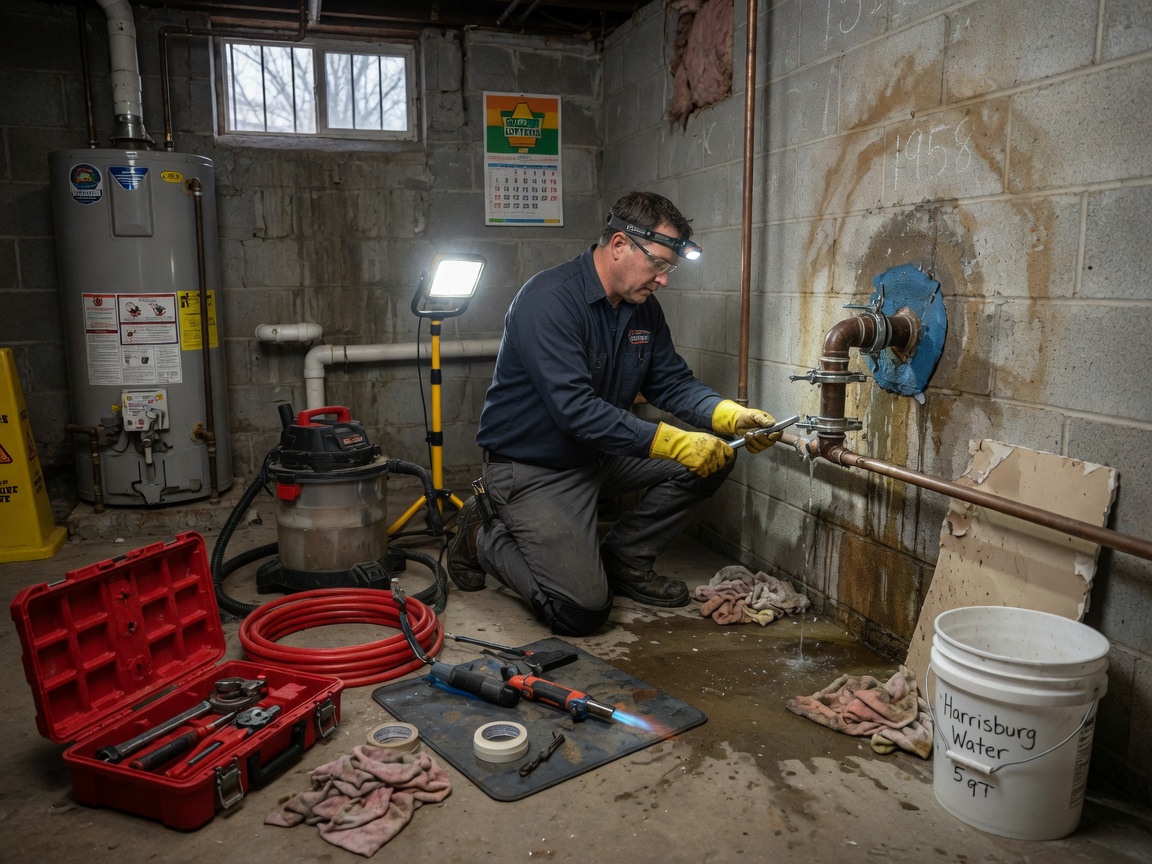
The job is tracing, then opening, then repairing. The plumber may isolate sections of the system, use listening gear or a thermal camera, and cut a small access hole in plaster or a basement floor. When a run keeps failing in several spots, the better answer is often replacing the pipe rather than chasing leaks one at a time. Cost depends on how hard the leak is to find, how much has to be opened, the pipe material, and the patching afterward.
A hidden leak is rarely an emergency on the first day, but it should not wait weeks, because wet framing and mold make the repair bigger. It becomes urgent when water is dripping through a light fixture, when a ceiling bulges, or when the leak turns into a burst pipe. If any of those happen, shut the main.
If you suspect a leak you cannot see, call Harrisburg Pipe Repair Line at (717) 853-4052. We will connect you with an independent plumber who handles hidden leaks in your area, and the plumber does the tracing and the repair.
Technician insight
Look at the stain, then look above it, then look at what runs along that wall. In a plaster house the leak is almost never directly over the stain. Check the meter at night when the house is quiet, then ask the plumber to start from the wettest spot and work upstream. Taking a photo of the stain every few days tells the plumber how fast it is growing, which is worth more than any guess at the pipe.
Water Leak Repair Services We Offer
✓Visible Supply-line Leak Repair
Leaks under sinks, at valves and on exposed pipes are found by sight and repaired in place. Little or nothing needs to be opened.
✓Leaks Behind Plaster and Lath
The plumber traces the water back along the lath and opens only what is needed. Plaster patching afterward is a separate step.
✓Leaks Under a Basement Floor
A line under the slab is located first, then either repaired through a cut in the floor or rerouted. This is the largest kind of leak job.
✓High Water Bill Investigation
When the bill jumps with nothing dripping, the plumber tests the meter and the lines to find where the water is going.